
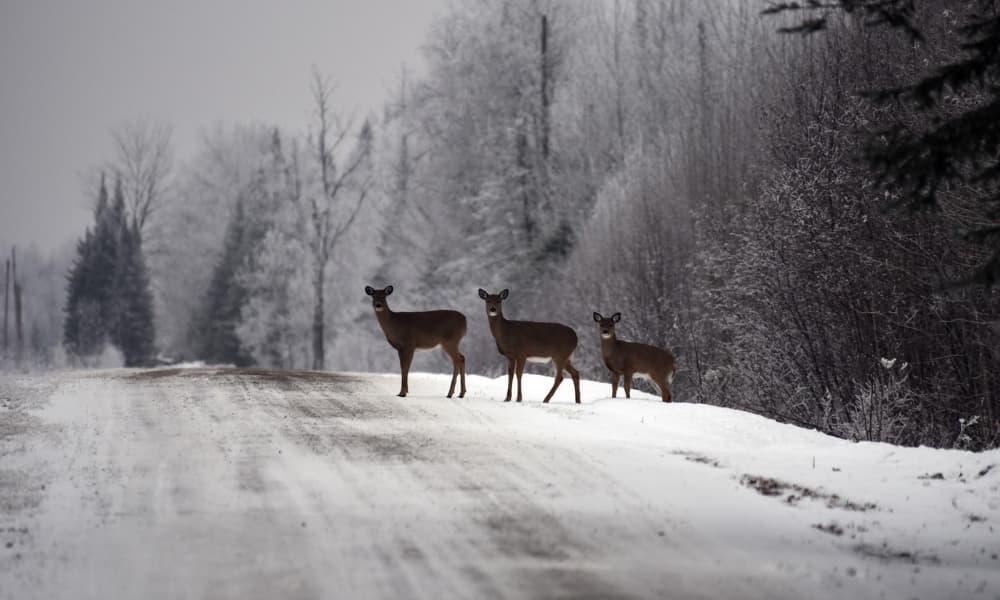
A deer strike can leave you with damage, paperwork, and coverage questions. Here’s what New York drivers should do after impact and how auto insurance may help.
Key takeaways:
- Comprehensive coverage generally applies to direct deer strikes, subject to the policy and deductible.
- Swerving to avoid a deer can change which coverage applies if the vehicle hits another object or car.
- A police report doesn’t replace your own DMV report. New York’s filing requirement depends on injuries, deaths, and the amount of property damage.
- Claim handling may involve documentation, towing, inspection, rental benefits, and the applicable deductible.
- Check the car for hidden damage and ask how New York’s comprehensive-claim surcharge protections apply.
A deer darts into the road, you hear the impact, and suddenly you’re deciding whether it’s safe to drive. Insurance matters, but your first job is to protect yourself, your passengers, and other drivers.
Auto insurance generally covers a direct deer strike if you had comprehensive coverage when the crash happened. Liability-only insurance won’t pay to repair your own car after that impact.
If you swerve and hit a guardrail, tree, or another vehicle, collision coverage generally handles damage to your car. Liability coverage may apply to damage or injuries you cause others.
The steps below explain how to stay safe, document the collision, meet New York’s reporting requirements, and ask the right questions before authorizing repairs.
At NICRIS, we can help you understand your existing coverage and the claim process. Adding coverage after an accident won’t make it apply retroactively.
Have questions about your protection? Contact us, get a quote, or call (516) 544-0006 to review your coverage before your next drive.
Step 1: Get Yourself and the Car Out of Danger
After a deer strike, move the car out of the travel lane only if you can do so safely. Stop somewhere visible and turn on your hazard lights. Don’t step into traffic to inspect the damage.
Call 911 if anyone’s injured, traffic is blocked, the deer is a roadway hazard, or there’s immediate danger. Tell the dispatcher your location and whether the car is smoking or leaking fluid.
If there’s no emergency, contact local police through their non-emergency number for guidance. Follow the dispatcher’s instructions about staying in the vehicle or moving to a safer location.
Step 2: Keep Your Distance From the Deer and Check the Car
Don’t approach, touch, or try to move a deer after a collision. An injured animal can kick or bolt without warning. Keep passengers and pets away and tell police where the deer went, if you know.
From a safe position, check the car for warning signs before you consider driving:
- Leaking fuel, coolant, or oil.
- Smoke, sparks, or burning smells.
- Broken lights or windshield damage.
- A loose hood, bumper, wheel, or body panel.
- Warning lights or steering or braking problems.
Arrange a tow if you notice any of these hazards or can’t tell whether the car is safe. A vehicle that starts and moves can still have damage that makes it unsafe to drive.
Step 3: Document the Collision
Document a deer collision only when you’re safely out of traffic. Take wide shots that show the scene and close-ups of damage. Useful photos include:
- The full vehicle and visible damage.
- The roadway, shoulder, and vehicle position.
- Debris, fluid, or damaged property.
- The deer’s location from a safe distance.
Attorney Jae E. Lee, managing partner of Jae Lee Law, recommends capturing more than the point of impact:
“Be sure to cover the accident scene and the road conditions, all damage to your vehicle, and any visible injuries you and your passengers have suffered.”
Don’t delay medical help to take photos. Record the time, location, direction of travel, witness contacts, and police report number. Save dashcam footage promptly, along with towing and storage receipts.
Our step-by-step guide to filing a car insurance claim explains how to organize these records. If the deer runs away, document what you can safely; don’t chase it for evidence.
Step 4: Know When New York Requires a Report
In New York, you must file a motorist crash report within 10 days if anyone is injured or killed, or if damage exceeds $1,000 to any one person’s property. Damage to your own car counts.
A deer strike with $1,500 in damage to your car meets that threshold even if no other vehicle is involved. Don’t assume a small dent means the damage falls below the reporting limit.
Jae highlights a common reporting mistake:
“Calling the police is not the same as filing an MV-104. These are two separate obligations, and they are not to be confused.”
If someone’s injured or killed, you must also notify police immediately. A report to your insurer doesn’t satisfy the DMV filing requirement, and failing to file can result in suspension of your driving privilege.
Use the official New York DMV crash-report guidance to submit online or find Form MV-104 for mailing. Keep a copy and a record of your submission.
Step 5: Notify Your Insurer Promptly
Notify your insurer promptly after a deer strike, following your policy’s reporting instructions. Don’t wait for a final repair estimate or completed police report to make initial contact. Have these details ready:
- Policy number.
- Date, time, and location.
- A factual description of the impact, including whether you struck the deer, another object, or both.
- Photos and witness information.
- Police report number and MV-104 status, if applicable.
- The car’s location, tow provider, and repair shop or storage facility, if applicable.
Ask for a claim number and your adjuster’s contact details. Confirm which deductible applies, whether the car needs an inspection, and what authorization is required before repairs begin.
Keep receipts for necessary emergency towing or steps taken to prevent further damage. Ask where the car should be stored and which charges are covered so avoidable storage costs don’t accumulate.
Does Car Insurance Cover Hitting a Deer?
Yes, a direct deer strike generally falls under comprehensive coverage if that coverage was in effect for the vehicle. New York DFS specifically includes hitting or being hit by an animal.
Comprehensive and collision are optional under New York law, although a lender or lessor may require them. Check your declarations page rather than relying on the phrase “full coverage.”
Each part of your auto policy serves a different purpose after a deer collision:
- Comprehensive: Generally covers damage from direct contact with a deer, subject to the applicable deductible and policy terms.
- Collision: Generally covers damage to your car when it hits another vehicle or object, including after a swerve to avoid an animal.
- Liability: Covers eligible claims for injuries or property damage you cause others. It doesn’t repair your own car.
- No-fault (PIP): Helps with qualifying injury-related expenses regardless of fault. It doesn’t pay for vehicle repairs.
- Rental and towing benefits: Check what your policy provides for this loss, including limits and authorization requirements. Comprehensive coverage alone doesn’t guarantee both.
If your policy lists liability, no-fault, and uninsured motorist coverage but no comprehensive coverage, those required protections won’t pay for direct deer-strike damage to your own vehicle.
Our guide to choosing auto insurance in New York explains how the coverages fit together. Our overview of New York auto insurance laws separates legal requirements from optional protection.
Direct Hit or Swerve: Why the Difference Matters
Whether you make contact with the deer matters when the insurer reviews the claim. Describe the full sequence instead of labeling everything a “deer accident”:
- Direct contact with the deer: Comprehensive generally applies.
- No deer contact, but a swerve into a tree, guardrail, sign, or ditch: Collision generally applies to the resulting vehicle damage.
- Hitting another vehicle: Collision may apply to your car, while liability may apply to damage or injuries you cause.
- Deer contact followed by another impact: Report both events. Ask the adjuster how the damage will be classified and which deductible or deductibles apply.
Our explanation of pothole damage and auto insurance shows another reason the cause of damage matters. A coverage label alone doesn’t decide fault or guarantee payment.
For prevention, New York DOT advises braking firmly without swerving when a deer runs into your path. A sudden swerve can send you into another vehicle, a pedestrian, or a fixed object.
How Does the Deductible Affect the Claim?
Your comprehensive deductible is your share of a covered deer-strike loss. It may differ from your collision deductible, so check the amount listed for comprehensive coverage on your declarations page.
If approved covered repairs total $3,500 and your comprehensive deductible is $500, the insurer would generally pay $3,000. You’d be responsible for the $500 deductible, subject to the claim settlement and policy terms.
If covered damage totals $400 and your deductible is $500, there’s generally no repair payment from that coverage. Follow your policy’s reporting requirements even when you expect the damage to be below the deductible.
A professional inspection can reveal cooling-system, wiring, sensor, steering, or alignment damage that wasn’t obvious at the scene. Ask the shop to document additional damage for the adjuster before completing extra repairs.
What If the Car Is a Total Loss?
If your insurer declares the car a total loss, request its written valuation and settlement breakdown. Check the vehicle’s mileage, trim, options, and condition against the information used to value it.
The settlement is generally based on the car’s actual cash value, with applicable adjustments and deductions. It isn’t automatically the price of a new replacement car or the amount you still owe on a loan.
If the loan balance exceeds the settlement, check any gap policy or loan/lease waiver you already have. Ask the insurer to explain the valuation and how to challenge incorrect vehicle details.
Will Insurance Pay for a Rental Car or Tow?
Jae cautions: “If your car is undriveable, don’t expect to automatically get a rental or free towing.”
Before booking a rental after a deer strike, confirm that reimbursement applies. Ask about the daily allowance, total limit, eligible expenses, and when payment ends, especially if the car is declared a total loss.
For towing, confirm any provider, mileage, dollar, or authorization limits. If emergency conditions prevent advance approval, keep the invoice and ask the insurer how to submit it for review.
Will a Deer Claim Raise Your Premium?
New York has specific protections here. DFS guidance on comprehensive claims says comprehensive premiums can’t be surcharged, and comprehensive claims can’t be used to surcharge other coverages.
A direct deer-strike claim handled under comprehensive coverage therefore shouldn’t trigger an accident surcharge. A separate collision claim after swerving may be evaluated differently under New York’s rules.
That protection doesn’t freeze your renewal price. If the price changes, ask us to help identify the reason and distinguish a general rate change from a prohibited comprehensive-claim surcharge.
Our guide to lowering auto insurance premiums in New York covers savings options. Review any proposed deductible increase against what you could afford after another loss.
Common Mistakes After Hitting a Deer
These mistakes can create safety risks, missing evidence, or unexpected costs after a deer strike:
- Standing in traffic to inspect damage.
- Approaching or moving the deer.
- Driving with leaks, warning lights, broken lights, or steering problems.
- Taking only one close-up photo.
- Assuming police contact completes the DMV reporting requirement.
- Waiting too long to notify the insurer.
- Assuming liability coverage repairs your own car.
Prepare Before the Next Deer Encounter
Before your next drive, save your insurer’s claims phone number, roadside assistance details, and policy information where you can find them quickly. Check your comprehensive deductible and any rental or towing limits.
Reduce speed where deer may be present, especially around dawn and dusk. If one deer crosses, watch for others. Stay alert near wooded areas and posted crossing zones.
At NICRIS, we can review your comprehensive and collision coverage, explain deductibles, and help you understand the next steps after a claim. You shouldn’t have to guess what protection you already carry.
Talk with us about your coverage before a deer encounter leaves you making decisions at the roadside. Save this guide with your insurance information.
Frequently Asked Questions
Does liability-only insurance cover hitting a deer?
Liability-only insurance generally won’t pay for deer-strike damage to your own car. Direct animal contact is generally handled under comprehensive coverage, if it was in effect when the accident happened.
Do I have to file MV-104 if only my car is damaged?
Yes, if damage to your car exceeds $1,000. New York also requires a motorist crash report when someone’s injured or killed. File within 10 days; calling police or notifying your insurer doesn’t replace that filing.
What if I miss the deer but hit a guardrail?
Damage to your car would generally fall under collision coverage, subject to your deductible and policy terms. Damage you cause to the guardrail may involve property-damage liability coverage.
Can I add comprehensive coverage after hitting a deer?
New comprehensive coverage won’t pay for an accident that already happened. We can help you review options for future protection, but the policy in effect at the time of the crash determines the current claim.