
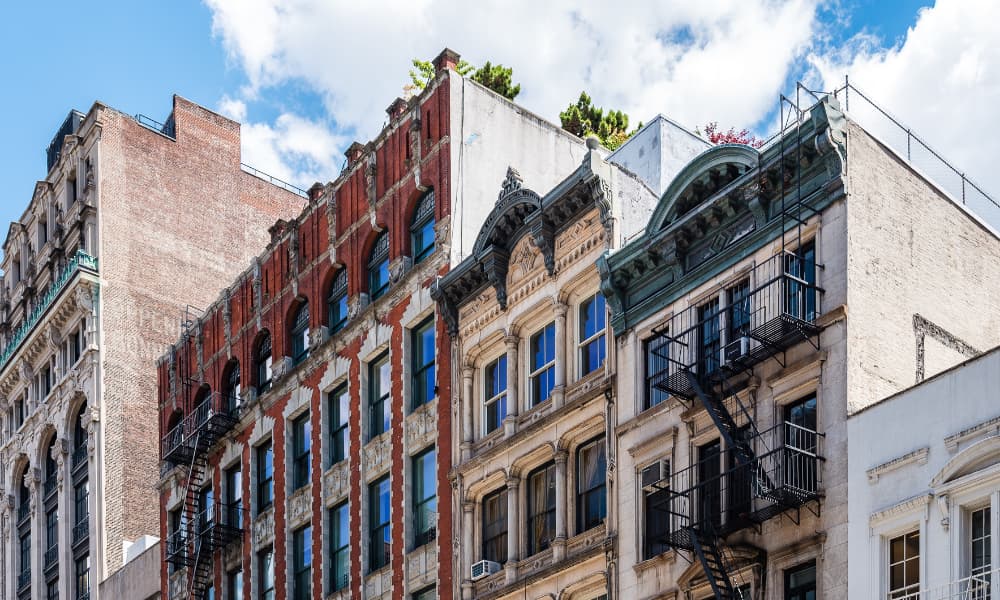
Keeping a building safe and compliant takes more than scheduling repairs. Boards and property managers also need to understand NYC inspection requirements, anticipate potential costs, and keep owners informed before expenses turn into surprises.
Key takeaways:
- NYC’s Façade Safety and Inspection Program mandates five-year inspections for buildings taller than six stories.
- Inspection and repair cycles can lead to expensive assessments for condo and co-op owners.
- Loss assessment coverage may provide limited relief when the assessment stems from a covered loss.
- Clear communication between boards, insurers, and owners is central to reducing confusion.
Façades help define the character of many NYC buildings. For a condo owner or co-op shareholder in a building taller than six stories, façade care also means compliance with strict maintenance and inspection standards.
Unit owners are often required to pay out of pocket to meet inspection requirements because individual HO-6 policies and loss assessment coverage don’t cover everything.
A clear understanding of relevant insurance coverage and policy limits puts stakeholders in a stronger position to prepare for façade repairs, inspection cycles, and related budgeting decisions.
Here’s what owners and boards need to know about the loss assessment coverage New York condo owners may rely on, what an HO-6 policy is, and the key questions around deductibles, master policies, and loss assessment limits.
NICRIS Helps Condo and Co-op Owners Understand Coverage
NICRIS is your guide to understanding NYC façade inspection safety program insurance, loss assessment coverage, and potential assessment gaps.
Our comprehensive reviews help align personal policies with building master policy structures, providing the support boards and property managers need to improve communication and risk planning.
Request a coverage review with us or call (516) 514-0006 to make sure your condo or co-op policy is prepared before the next special assessment arrives.
Why Façade Inspections Matter
NYC’s Façade Safety and Inspection Program (FISP) requires buildings taller than six stories to have exterior walls and appurtenances inspected every five years.
Because many NYC multifamily buildings are older and exposed to years of weather, inspections often lead to:
- Façade repairs.
- Emergency stabilization work.
- Waterproofing.
- Scaffolding projects.
Findings are collected in a technical report and filed with NYC. This is a public safety requirement because buildings with deteriorating façades can pose significant safety risks.
Meeting FISP requirements can have a significant financial impact on owners, and for many, the first sign of façade work is a special assessment notice.
What Is a Special Assessment?
A special assessment is an additional charge imposed by a condo association or co-op board that funds major building expenses not covered by normal reserves. It is often connected to major projects, including:
- Façade work.
- Roof replacement.
- Masonry repair.
- Reinforcing structural supports and building appurtenances, such as fire escapes.
- Fenestration repairs or replacement, including doors and windows.
- Elevator modernization.
Assessments can reach tens of thousands of dollars. Steep expenses, combined with the sometimes extremely high deductibles of building master policies, can leave shareholders and New York condo owners splitting very large bills.
Why Building Master Policies Don’t Always Prevent Bills
Building master policies can respond to certain covered losses, but they still have deductibles, exclusions, and limits. Many owners assume the master policy handles all repair costs, but boards may still pass partial costs to owners through special assessments.
This is where the loss assessment coverage that New York condo owners and co-op owners carry under HO-6 policies may become important.
HO-6 policies can cover personal property, personal liability, and other unit-owner exposures. For condo and co-op owners, they may also include loss assessment coverage.
Typically, an HO-6 policy helps cover an owner’s share of certain common-area losses when:
- The building experiences a covered insurance loss.
- The association assesses unit owners for part of the cost.
- The assessment falls within policy terms and limits.
However, even when owners have an HO-6 in place, it does not create a blank check for every building expense.
Portions of larger master-policy deductibles can still fall into coverage gaps, depending on the building’s master policy and each owner’s loss assessment limits.
What Loss Assessment Coverage for New York Condos and Co-Ops Typically Excludes
All buildings incur routine maintenance costs, which loss assessment coverage generally does not pay for. Likewise, purely cosmetic upgrades made to enhance a building’s appearance or market value generally are not covered.
Sometimes, the reserves condos and co-ops maintain for façade work simply are not enough, so owners must supplement the shortfall.
Flooding is another common exclusion, making it important for owners to consider separate flood insurance.
Loss assessment coverage also won’t extend to certain façade repair projects unrelated to a covered peril. These projects include sealant replacement, repainting, or power washing exterior walls.
How FISP and Façade Work Intersect With Insurance
For property risks, insurance is generally designed to cover sudden, accidental events, not predictable wear and tear or maintenance costs.
Many façade projects are preventative maintenance or stem from aging infrastructure rather than covered losses, so insurance may not apply.
Some special assessments involve a mix of covered and non-covered expenses, which can still leave owners responsible for part of the bill.
Boards and owners need realistic expectations around NYC façade inspection safety program insurance implications, especially when a project blends maintenance, repairs, and covered-loss considerations.
When Does Increasing Loss Assessment Limits Make Sense?
Older buildings often require more frequent maintenance and repairs.
Buildings with higher deductibles create greater owner exposure, especially in NYC, where property-related expenses continue to climb. Luxury or high-value buildings may also generate larger assessment amounts.
Owners in buildings with aging infrastructure or higher-value common areas may be strong candidates for higher voluntary loss assessment limits.
Even a relatively small premium adjustment can substantially improve protection.
Shareholders and New York condo owners may not want higher premiums, but higher limits can provide more peace of mind around future building-wide claims.
What Should Shareholders and New York Condo Owners Ask Before Assessments?
This is where strong communication between stakeholders and their insurance providers is essential.
Clear answers to the following can help prevent financial surprises and delays:
- Has the building experienced prior assessments related to deductibles or claims?
- Are façade-related projects considered covered losses or maintenance?
- Does my HO-6 or co-op policy include loss assessment coverage?
- What does the building’s master policy cover?
- What is the master policy’s deductible?
- What are my current limits?
These conversations help owners understand NYC façade inspection safety program insurance while highlighting potential exposure to uncovered assessment costs.
How Boards and Property Managers Can Reduce Owner Friction
Projects tend to go more smoothly when boards clearly communicate insurance responsibilities to shareholders and owners before maintenance or repairs begin.
Boards and managers should also:
- Maintain consistency in approval, budgeting, and assessment practices.
- Define the differences between covered losses and maintenance costs so owners know why they’re paying for façade work and not just how much.
- Encourage owners to review individual HO-6 or co-op policies annually.
Pushback from shareholders and New York condo owners can delay façade work and leave buildings vulnerable, so transparent communication is important for reducing frustration and misunderstandings.
With the right preparation, owners can approach façade projects with confidence and fewer financial surprises.
Frequently Asked Questions We Hear
Condo and co-op insurance questions can get complicated quickly, especially when façade inspections, special assessments, and building master policies overlap.
We’ve compiled a list of frequently asked questions we hear to help owners and boards better understand where coverage may apply, where gaps may remain, and what to review before façade work begins.
1. What is loss assessment coverage for New York condo owners?
Loss assessment coverage is part of many HO-6 condo insurance policies. It can help pay a unit owner’s share of certain building-wide losses when the condo association or co-op board passes part of that cost to individual owners.
However, it usually only applies when the assessment is tied to a covered loss, not routine maintenance, cosmetic work, or long-term deterioration.
2. Does loss assessment coverage pay for NYC façade repairs?
Not always. NYC façade work often comes from inspection findings, aging materials, maintenance needs, or required safety repairs.
Since property insurance is generally designed around covered causes of loss and specific policy exclusions, façade repairs may fall outside loss assessment coverage if they are considered maintenance rather than a covered insurance event.
3. Why do NYC condo and co-op owners receive special assessments for façade work?
Special assessments happen when a building needs to fund major costs that exceed its normal reserves. Façade repairs, scaffolding, waterproofing, masonry work, engineering reports, and emergency stabilization can become expensive quickly.
NYC’s façade rules have historically required exterior inspections for buildings over six stories, and repairs may require sidewalk sheds or scaffolding until unsafe conditions are resolved.
4. How often do NYC buildings need façade inspections?
NYC’s façade inspection rules, often associated with Local Law 11 and FISP, have required buildings taller than six stories to complete exterior façade inspections on recurring cycles.
Recent scaffold reform legislation also introduced changes around shed permits and inspection timing for newer buildings, so boards and managers should confirm the current requirements for their building before budgeting.
5. What should condo owners ask before increasing loss assessment coverage?
Owners should ask what the building’s master policy covers, what the deductible is, whether past assessments were tied to covered claims, and how much loss assessment coverage is included in their HO-6 policy.
It is also worth asking whether higher voluntary limits are available, especially in older buildings, high-value properties, or buildings with large master-policy deductibles.