Lower home coverage rates at the touch of a button? It’s possible…with the right kind of upgrades.
Key takeaways:
- Smart tech can monitor homes for insurance claim risks.
- Potential dangers like water damage, fire, and theft can be responded to more quickly.
- Insurers could apply a smart home insurance discount.
- Smart upgrades must be insurer-approved to qualify.
Did you know that scaling up your in-house technology could bring down your New York insurance expenses?
It’s a life hack already being enjoyed by some of New York’s tech-savvy homeowners and safety-conscious property managers.
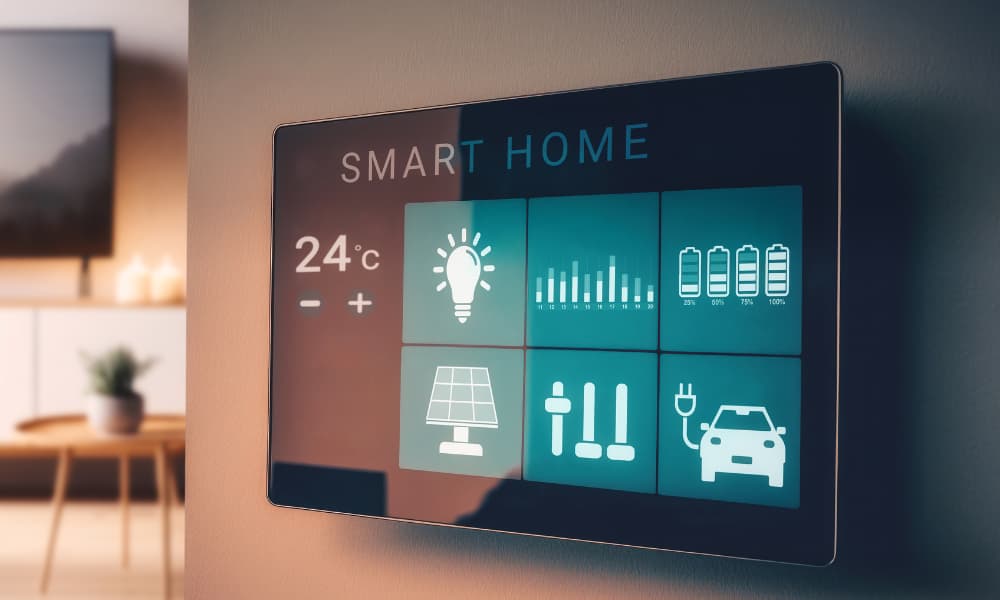
They’ve discovered that smart tech does more than streamline domestic processes. Smarter spaces can create safer homes because some of these upgrades also reduce risk.
Installing them puts property owners in the proactive policyholder category, and that’s a strong step toward savings on home insurance smart devices.
Let’s look at how a few insurer-approved devices could help with a smart home insurance discount by protecting your property and reducing claims.
Want to skip the reading and get straight to a quote? Get started here.
Smart Home Technology Is Changing Home Insurance in NY
NY home insurance is strongly influenced by winter weather, urban density, and a lot of older houses. This means the risk of fires, burglaries, and water damage is all elevated.
Certain smart devices are designed to address these problems, like:
- Smoke and carbon monoxide alarms.
- Home security systems.
- Water leak detectors.
Smart tech has changed the insurance equation by detecting potential issues before they become claims, improving the chances of savings on home insurance.
New Yorkers who respond to risks after they occur don’t score the most points with insurers. Those fitting smart devices in advance do.
A Closer Look at Smart Devices
Smart tech can be a great help in keeping an unblinking eye on your home’s perimeter and internal processes.
Four key areas from an insurance perspective are:
- Water Leak and Freeze Detection: NY’s heavy winters and rising flood risk make water-damage claims common. Smart leak detectors can spot unwanted moisture and shut off water systems, while freeze detectors alert homeowners to extreme temperatures that can rupture pipes.
- Fire and Smoke Monitoring: Centrally monitored smart devices (where smart devices are remotely overseen by another company) outperform traditional smoke alarms in effectiveness and reduce potential damage because they immediately contact emergency responders at the first sign of fire.
- Security Systems: Burglaries recently hit the lowest rate of any January in NYC’s history, but that’s no reason to take chances. Smart security cameras, doorbells, and motion sensors can detect and respond quickly to unwanted activity, reducing potential claims, especially in highly-populated areas.
- Smart HVAC and Electrical Safety Improvements: Smart thermostats help prevent insurance claims, such as frozen pipes, by maintaining minimum indoor temperatures. Electrical monitoring systems can detect circuit failures or overloads that can quickly escalate into fires.
Smart upgrades can make a significant difference to insurers when assessing a home’s overall risk. It tells them you’re a measurably safer prospect, which could lead to a smart home insurance discount.
How Much Can Homeowners Really Save?
Home insurance smart device savings vary based on who you’re insuring with and which devices you have.
And just like combining auto and home insurance can save money, bundling multiple smart devices could earn you additional discounts. You could also be eligible for further reductions if your claim frequency stays low.
A good example of cost vs return is Allstate’s Arlo Security Bundle. It’s a combined smart package that watches homes for intruders while monitoring smoke and carbon monoxide levels, and it’s remotely managed 24/7 for rapid emergency response.
Combining this package with other home security measures increases the likelihood of a smart home insurance discount and could reduce steep expenses related to fire, theft, or medical bills. These savings can offset the cost of devices within a few policy years.
How a Smart Home Insurance Discount Works
Calculating the savings from smart home insurance devices involves additional variables.
How much money can actually be saved also depends on:
- Where in New York you’re located.
- Your level of device coverage.
- Whether the devices are recognized or approved by the insurer.
Some insurers may require even more, such as proof of professional installation and central monitoring.
Sometimes, a smart home insurance discount is only applied at your next renewal, while other providers may apply it upon proof of installation and activation.
How to Tell Insurers About Smart Home Upgrades
Insurers won’t apply discounts without proof of smart upgrades, meaning homeowners must contact them after installing.
That way, providers can receive receipts, service contracts, and accurate details on what smart devices policyholders have and what they’re designed to do.
That’s when providers start reviewing plans to decide if a smart home insurance discount applies. And since smart tech’s impact on insurance is still evolving, it’s best to regularly review your policy to maximize savings on home insurance.
Privacy, Data Sharing, and What Homeowners Should Know
It’s important that homeowners understand how insurers monitor smart devices and how that intersects with personal privacy. Transparency on both sides is essential for the relationship between tech and insurers to work.
Your provider will require limited access to some of your home’s processes and occasionally, events within or surrounding it.
Here are key points to consider for responsible sharing that also respect your personal space:
- Smart cam footage can be central to resolving home insurance claims. Insurers may need to review that footage, but typically don’t access live camera feeds inside or around the home.
- Certain discounts require sharing data with the insurer. This may include readings from devices like smoke alarms and water detectors.
- Regular smart data may be necessary to prove devices are active.
- Proof of maintenance may also be requested to qualify for savings on home insurance smart devices.
Contact your insurer for a clear picture of what data needs to be shared and how it’s used. Combine that question with today’s tips to boost the chances of a smart home insurance discount.
But don’t stop there. Stay smart and discover seven more money savers that could make your plan even more manageable.
NICRIS Helps Homeowners Maximize Smart Home Savings
Adapting your home to modern technology can align it with evolving insurer incentives.
NICRIS keeps our customers at the cutting edge and helps them make targeted smart-tech improvements that insurers seek.
We’ll tell you which upgrades qualify, and when you take advantage of our annual policy review, we can make sure every eligible saving is correctly applied (not only the smart-related ones).
Get in touch, and let’s see if you’re missing out on a smart home insurance discount!