
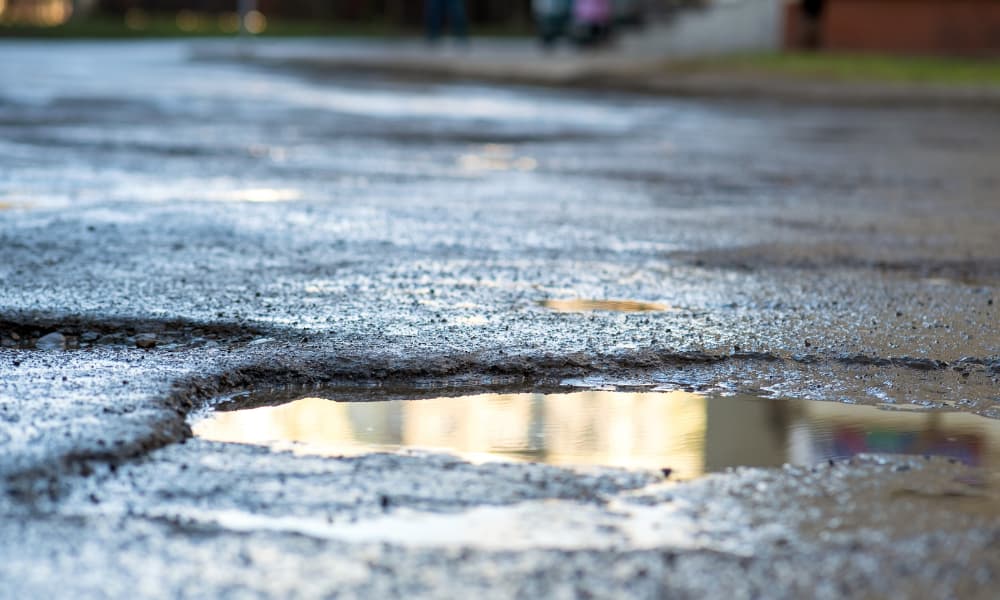
New York’s potholes don’t discriminate. Sedans, SUVs, and suspensions all take the hit. The real question is whether your auto insurance takes the hit with you, and who actually picks up the tab when the road wins.
Key takeaways:
- Potholes are a major problem on NY state roads.
- Tires, suspension, and more can receive significant damage.
- Only one form of auto insurance covers the cost of these damages.
- Reimbursement from your city or the state may be available.
Let’s start with the good news: this heavy New York winter will eventually become spring. Now for the “News You Have to Hear”: Potholes will return to New York roads…and they’re just as good at wrecking tires, rims, and suspensions as ever.
Now’s the time for suburban travelers and city commuters to start asking, “Does my car insurance cover pothole damage?” and get clear on whether their auto plan is optimised for pothole-related problems.
That’s why, in this article, we’ll dive into where auto insurance coverage can sometimes be useful, but also why it’s not always worth the effort to file a claim.
We’ll break down when New York State or your city might help foot the repair bill…and share a few smart ways to dodge pothole damage before it turns into a very expensive surprise.
(Want to skip the reading and get straight to an auto insurance or flood insurance quote? Get started here.)
Why Pothole Damage Is a Seasonal Problem in New York
Changes in the weather can wreak havoc on New York’s roads. The bitter cold giving way to warmer temperatures creates a freeze-thaw cycle that repeatedly contracts and stretches asphalt.
Eventually, it cracks, and weakened sections of the road begin to collapse. Struggling surfaces have an even harder time in traffic-heavy areas such as highways and city streets. That’s why over 1.3 million had to be filled in 2025.
This plugged plenty of potential problems, but there are still enough to keep the claims coming. Understanding pothole damage insurance in New York helps drivers get their vehicles back in shape without unnecessary stress and expense.
Potential Types of Pothole Damage
“Does car insurance cover pothole damage?” isn’t the only question drivers should be asking.
“How bad can the damage get?” is another important question, because potholes don’t just cause one problem. They kick off a domino effect that can turn a small jolt into a full-blown repair headache.
Here’s a quick breakdown of how primary damages can branch into larger problems:
- Blown, torn, and worn tires: Potholes can damage tire cords and belts, weakening the tire’s structure and sometimes causing an explosion. Even relatively “harmless” encounters with potholes wear treads down over time, weakening road grip and increasing accident risk.
- Bent or cracked rims: Chipped and cracked rims can cause wider problems for vehicles, just like cracked roads cause potholes. They’re entry points for rust, which can quickly compromise wheels.
- Damaged suspension or steering components: Shocks and struts can sustain significant damage from potholes, limiting the vehicle’s control.
- Alignment issues and undercarriage damage: Misaligned wheels also compromise vehicle control, making it difficult to steer in a straight line and significantly increasing the risk of accidents.
Vehicle damage doesn’t always start big and isn’t always visible. Those dings worsen over time if left unchecked, putting your well-being (and your wallet) at unnecessary risk.
NY State requires that every vehicle be safety serviced at least once a year, which can help identify hidden damage and supplement pothole damage insurance in New York.
So, Does New York Car Insurance Cover Pothole Damage?
It does, but only if your plan has collision coverage.
Holes still count as something you hit despite not being solid objects like another vehicle or a tree, so pothole damage doesn’t classify as a comprehensive claim.
Vehicles are typically covered when the following parts are damaged by hitting a pothole:
- Tires.
- Wheels.
- Suspension.
- Alignment.
- Undercarriage.
It’s tempting to have only liability coverage on your New York auto insurance, since it’s legally required, unlike collision coverage.
However, liability-only won’t cover any pothole damage to your vehicle, which is one of several good reasons to have comprehensive protection.
And don’t forget: you’ll still have to pay your deductible on pothole damage insurance in New York, like any other collision coverage claim.
When Filing a Claim Makes Sense (and When It Doesn’t)
Some pothole damages require expensive repairs. Sometimes, they’re on the manageable side when damage is minor. That’s when it may be best to pay out of pocket, especially if your deductible is similar to the repair cost.
The fewer claims you make on your pothole damage insurance in New York, the better. Even small multiples can make you look like an insurance liability, possibly raising your rates or triggering ineligibility at renewal.
Claims are best when repair costs significantly exceed deductibles. Should you go ahead with one, you’ll need to provide your insurer with thorough documentation of the problem covering:
- When and where the incident happened.
- Multi-angle photos and/or videos of the pothole and the vehicle damage.
- The vehicle and insurance details of anyone involved.
- Repair receipts or estimates.
Following those steps will make your claim as solid and streamlined as possible. What’s more, pothole damage insurance in New York isn’t your only route to possible reimbursement.
Can NY State or City Reimburse for Pothole Damage?
Technically, yes. Your best chance is filing a small claim while accepting the following facts:
- The claim must be made within 90 days of the incident and will also require extensive documentation.
- Highway-based pothole claims won’t be considered unless it’s “pothole season,” which is May 1 to November 15.
- Claim resolution can take up to 10 weeks, and it may still be denied.
It’s certainly worth a try if you don’t mind waiting.
In the meantime, you can switch “Does car insurance cover pothole damage?” to “What can I do to avoid damage?”
Tips to Prevent or Minimize Pothole Damage
Limiting your pothole problems boils down to the basics of responsible road behavior and vehicle ownership.
For example, slowing down whenever you’re on a road that you know has been poorly maintained, or that’s unfamiliar, goes a long way in protecting you.
Some other best practices are:
- Avoiding puddles (which may hide potholes).
- Driving more slowly wherever feasible, and especially in low-light conditions.
- Maintaining an increased following distance so you can see oncoming potholes earlier.
- Scheduling a service check. Not only will this make winter driving safer, but it will also reduce the risk of spring potholes.
Lastly, be the one to report the pothole rather than leaving it to someone else. Giving your city and state advance notice of where potholes have appeared may also help get a reimbursement claim approved later.
NICRIS Helps New York Drivers Navigate Pothole Season
NICRIS helps drivers understand whether their policy answers the question: “Does car insurance cover pothole damage?”
We’ll guide you safely toward a clearer understanding of all aspects of collision coverage, and when making a claim is in your best interests.
Contact us with any insurance questions or concerns about pothole damage insurance in New York, or to get a quick quote. Let’s get you set up safely for spring!